

 Start Read
 Recommend

Bernie and Pat are two 10 year olds who are very passionate about the environment. One day Bernie is concerned because they are cutting down trees around her home. Their environmental club at school took a trip to the forest for a cleanup were Bernie and Pat meet a talking tree.

1. Hi friend, my name is Kali and I've learned some new words. 2. Would you like to learn them with me? Yes. Great. 3. Where should I start? 4. I learned a new word like vote because I have a voice and I matter. 5. I learned a new word like freedom because I am free to be me. 6. I learned a new word like happiness because I have the right to pursue life, liberty, and the pursuit of happiness. 7. I learned a new word like equal because all people were created equal. 8. I learned a new word like anything because everyone will say you can be anything. I just have to believe it. 9. I learned a new word like fearless because I am bold enough to do the right thing even when it is hard to do. 10. I learned a new word like love because it is the most important thing of all.

Girl happily watching her mother’s one piece swimsuit shrink to her size in the dryer it
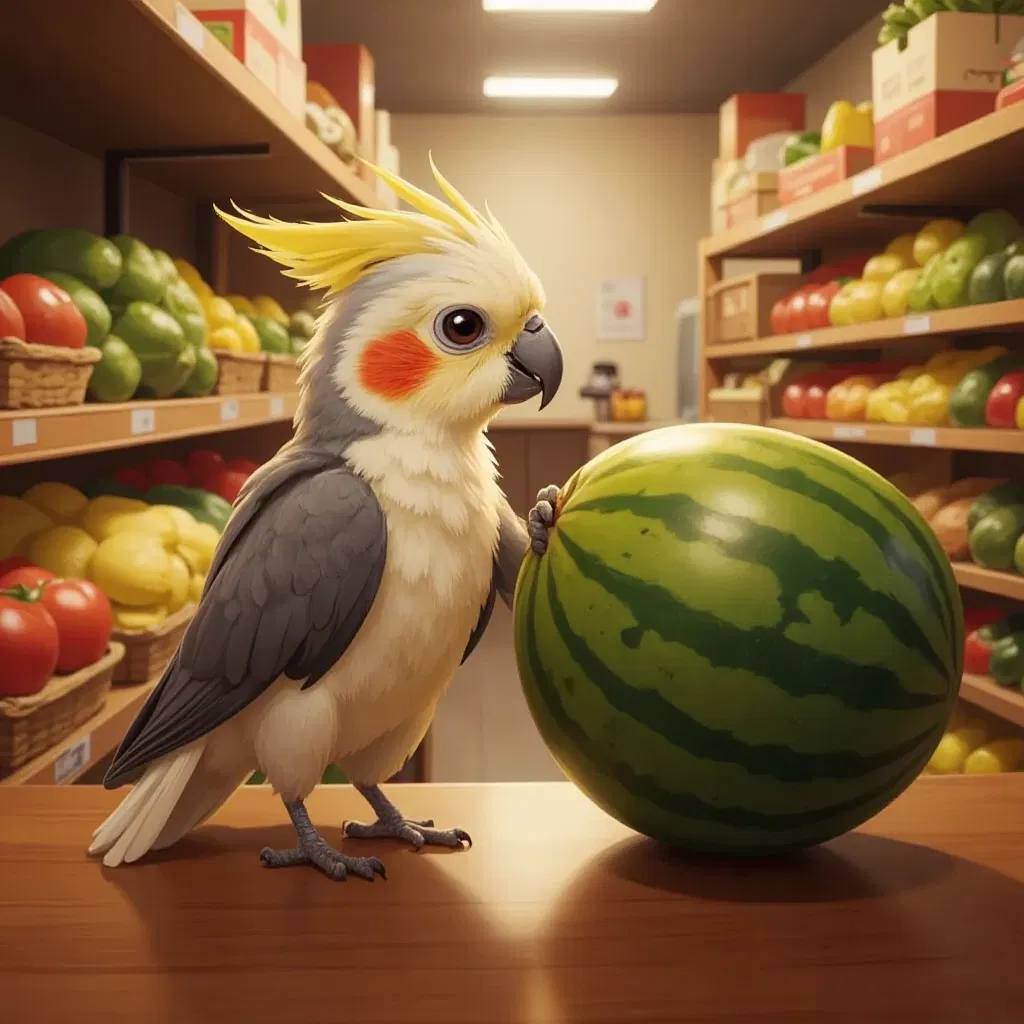
Chapter 1: Bird Man A man goes out to get watermelon for his family but is possessed by a ghost called the Curses Ghost. The ghost turns him into a bird, and he can no longer get the watermelon. Chapter 2: The Bird Man or the School Man The transformed man struggles with strange experiences at school, where reality bends and chaos ensues. He lives in a bird nest with his bird family. In school, things get weirder—someone tries to take over the world, and a mysterious villain appears. Chapter 3: Burb Girl and Bird Man Bird Man meets Burb Girl. They try to live normal lives while hiding their identities. During a pizza party, their secrets almost come out. A dramatic moment reveals that Bird Man is still trying to prove who he is. Chapter 4: Bird Man’s Baby Bird Man and his family face new drama when a baby appears. There's confusion about who the real Bird Man is, and a mysterious “Bird Baby” shows up without explanation.

Noong unang panahon, may isang babaeng naging tanyag dahil sa kaniyang angking kagandahan. Ang dalagang ito ay nagngangalang Dahlia. Sa buong sulok ng bayan at maging sa mga ibayong dako ay rinig ang tungkol sa kagandahan ng dalaga. Si Dahlia ay may mapupungay na mga mata, mahaba at itim ang buhok, mapupulang mga labi at makinis na kutis. Dahil sa kaniyang angking kagandahan, maraming mga binata ang naglalayong makuha ang kamay ng dalaga upang mapangasawa. Ngunit si Dahlia ay mailap sa mga tao.

Whispers of a Cardinal: A Tale of Healing Hearts" unfolds in a land of joy, where 8 year old Ray's carefree world is shattered when a loved one departs. Grief casts a heavy shadow, but a crimson-winged cardinal appears, offering solace. Through whispered wisdom, the cardinal assures Ray that love endures in memories, laughter, and tears. Hand in hand, they navigate the meadow, dancing with sweet memories and embracing the cardinal's teachings of hope. In this triumphant tale, grief departs, and hope restarts, illustrating the transformative power of love and the enduring spirit of the heart's dance. "Feathered Lullaby" is a timeless reminder that, in life's dance, love persists—in the whispers of a cardinal's swirl.

This is a story about co workers going on an adventure together to save the world from book thieves. They plan on erasing history and the movement is strong. The employees at StorySlinger save the day. Their CEO and Founder, Mazviita turns into a villain. They live underwater and swim everywhere with diving gear. They work alongside talking dolphins and humanity has evolved to meet this environment. They travel to another universe to get assistance. But the boss, Mazviita turns evil.

habia una vez dos pelados, que travajaban en una oficina con mucho calor. pero un dia le instalaron un aire acondicionado y desde entonces viven rodeados de pinguinos. y colorin coloradao este cuento se a acabado.
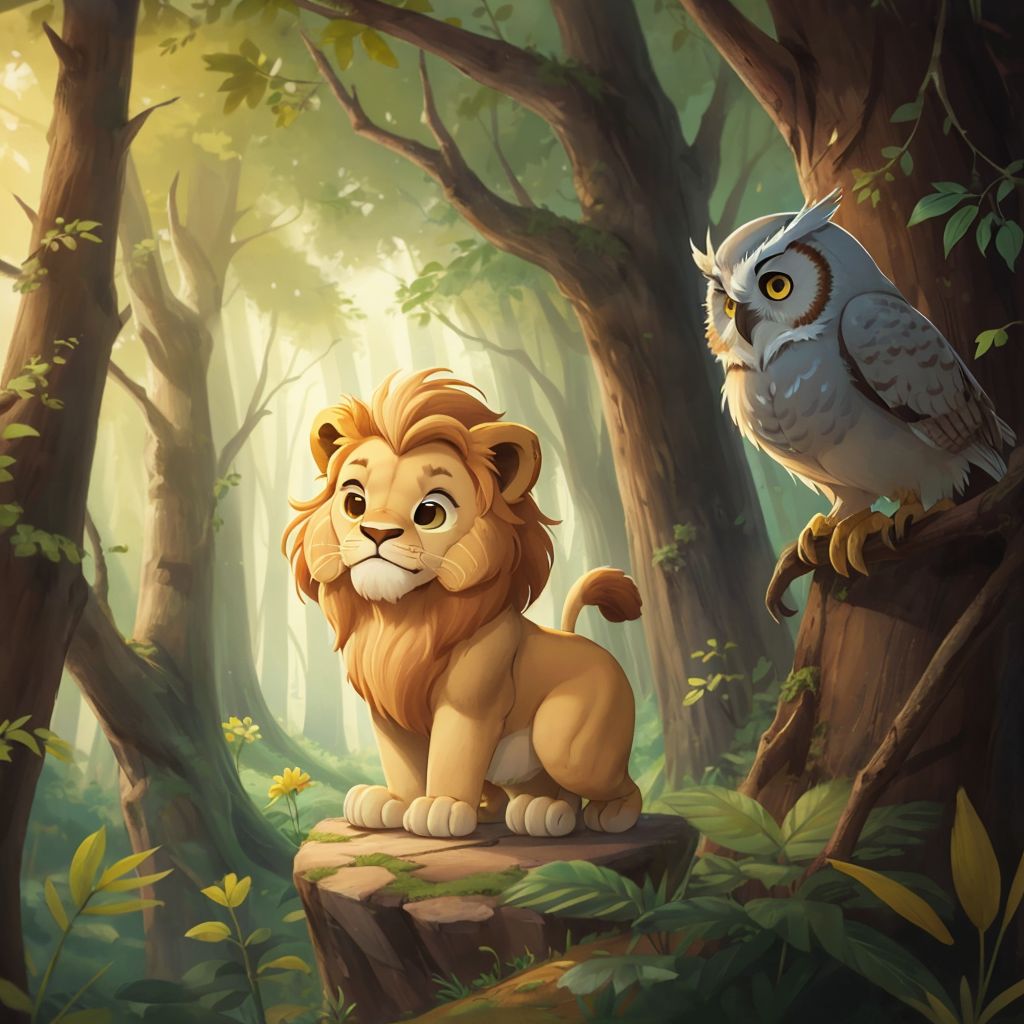
Join Leo the lion and Luna the owl on an adventure through a mysterious forest filled with shadows and fears. Together, with kindness and friendship, they help a scared tiger, Taro, face his fears and discover the light that chases away the darkness. This heartwarming story teaches children the power of bravery, kindness, and facing challenges with the support of friends. Perfect for young readers, it encourages them to overcome fear and embrace friendship and courage in every adventure.
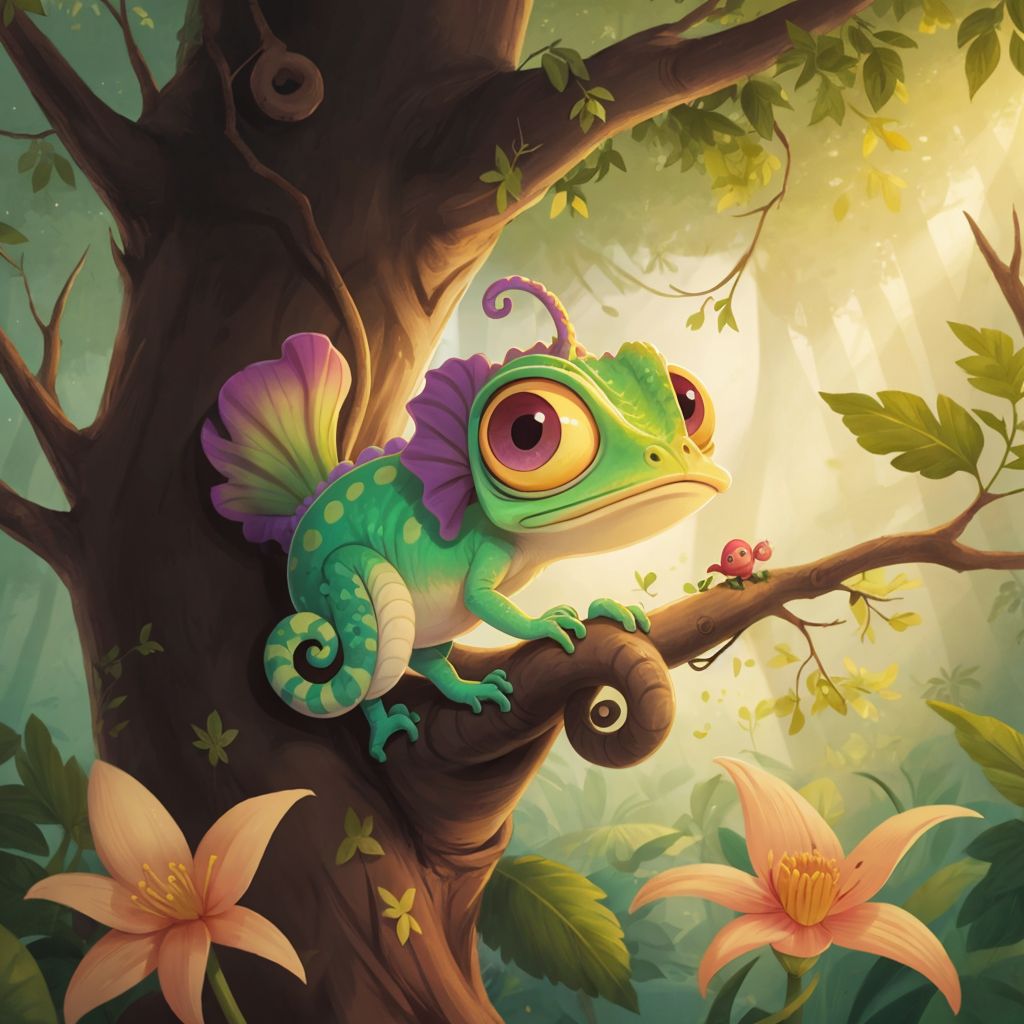
In a vibrant forest filled with towering trees and blooming flowers, there lives a charming little chameleon named Lily. Unlike any other chameleon, Lily has a magical ability to change her skin color based on her emotions. When she feels joyful, she radiates a bright yellow like the sun, and when she is sad, her skin turns a deep blue like the ocean. One sunny morning, excitement fills the air as the Great Forest Festival approaches. Lily eagerly joins her friend Benny the Bunny, who is bouncing with anticipation about the delicious carrot cake they will enjoy. As they make their way to the festival, Lily's cheerful colors shine brightly, reflecting her happiness. However, when they arrive, Lily notices her friend Max the Squirrel sitting alone under a tree, looking forlorn and gray. Concerned, Lily approaches him and learns that he has lost his favorite acorn. Seeing her friend in distress turns her vibrant colors to a soft blue, and she immediately offers to help him find it. Determined to lift Max’s spirits, Lily and Max search high and low throughout the festival. As they look under leaves and behind rocks, Lily’s empathy and kindness shine through. After a thorough search, Lily spots something shiny near a bush and excitedly calls out to Max. When they find the lost acorn, Max's colors burst into a bright orange, filling him with joy. As the festival continues, Lily realizes that helping her friend not only made Max happy but also filled her heart with even greater joy. Her colors sparkle in a beautiful rainbow, symbolizing the power of friendship and emotional expression. Through her adventures, Lily learns that sharing joy and understanding emotions creates deeper connections and a more vibrant life. This heartwarming story teaches children about the importance of recognizing, expressing, and supporting emotions in themselves and others, all through the delightful journey of Lily the Chameleon.
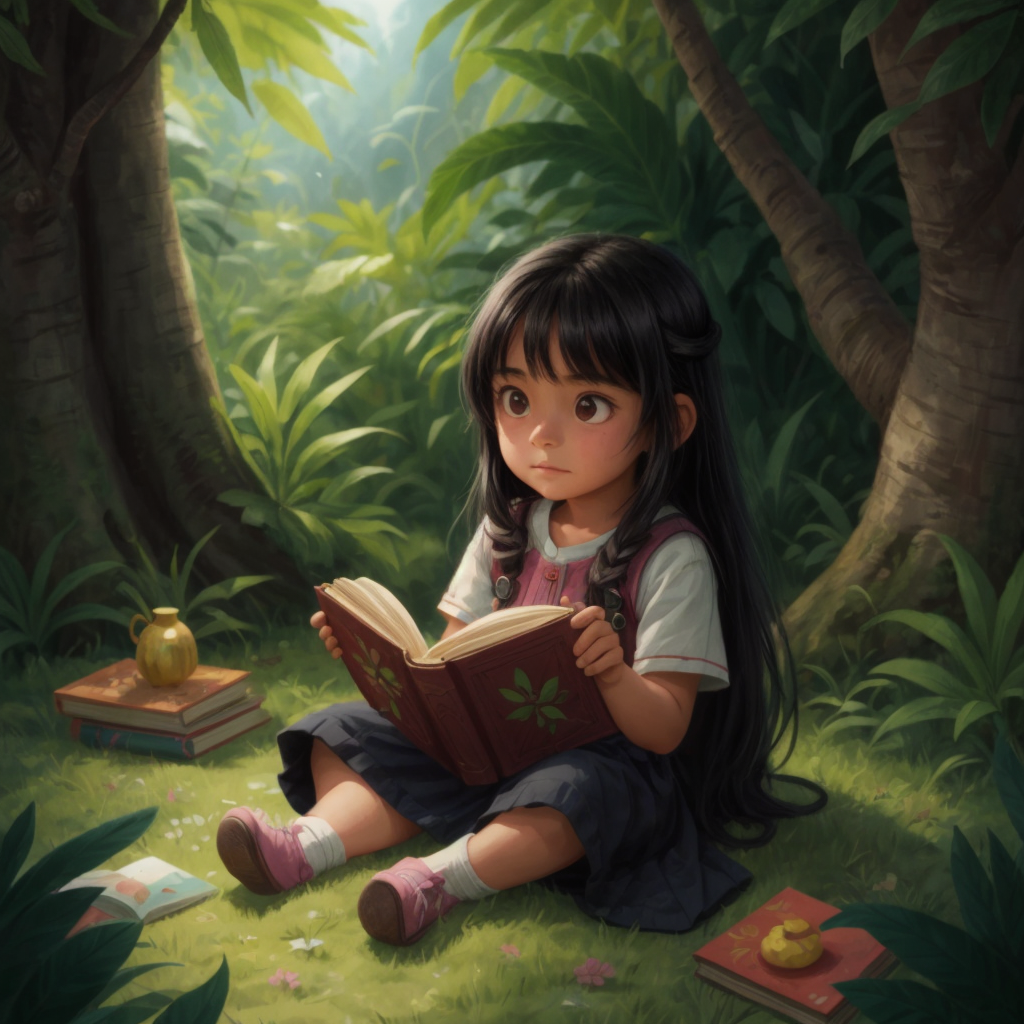
1. One day in the village of Batu, where the legend of the Enchanted Stone flourished, lived a child named Ananda. Ananda was a curious soul, always eager to learn about everything around him 2. On that morning, Ananda sat under the shady tree in front of his house, listening to his grandfather's tales about the wonders of the Enchanted Stone 3. His eyes sparkled, and his heart was filled with curiosity. Ananda decided to find out more about the stone and whether true fortune could come from owning it. 4. Ananda began investigating the legend of the Enchanted Stone by asking the elders and villagers. Some shared intriguing stories, while others were skeptical about the stone's existence. One elder in the village gave Ananda a clue. 5. One night, Ananda dreamed of a hidden place in the forest behind the village. In his dream, he saw a golden light shining through the trees. Without hesitation, Ananda decided to follow the guidance in his dream 6.
1.Lily, a 13-year-old girl, is secretly in love with a classmate. 2. Lily's friends are in love with another boy. 3.Girls write love messages in class. 4.Lily meets a boy and first love and kiss occur

Deep in the Australian bush, a young kangaroo named Jumpo was full of energy and curiosity. But one thing bothered him—he couldn’t jump yet! The other kangaroos soared effortlessly through the grass, while Jumpo just watched. Determined to learn, he hopped over to his wise friend, Wally the Wallaby. “To jump, you need to build some skills,” Wally said. Balance: “Start by walking forward, backward, and on uneven ground like sand to steady your feet.” Foot Position: “Keep your feet shoulder-width apart. This gives you a strong base and helps your arches.” Coordination: “Jumping is about timing—bend your knees and straighten them at the right moment.” Strength: “Your calf muscles give you the push you need to leave the ground.” Wally started Jumpo with simple exercises. Step 1: Bouncing Wally held Jumpo’s hips and bounced him on a soft cushion. Soon, Jumpo felt the rhythm and tried bouncing on his own. “Next, try bouncing on a trampoline or your bed,” Wally suggested. Step 2: Standing on Tiptoes “To learn the push-off, practice standing tall,” Wally said. Jumpo reached for toys while on tiptoes, then practiced walking on them. Step 3: Bouncing on Tiptoes “Now try bouncing up and pushing onto your tiptoes,” Wally instructed. Jumpo held onto a sturdy branch at first and then tried it alone. After weeks of practice, Jumpo felt ready for his first jump. He bent his knees, pushed off with his toes, and… he was airborne! “See, Jumpo? Jumping is about practice and balance,” Wally cheered. From that day, Jumpo practiced daily, soon bounding through the bush like the other kangaroos.

Birth and Early Life: Moses was born during a time when the Israelites were enslaved in Egypt. Pharaoh, fearing the growing population of Israelites, ordered the killing of all newborn Hebrew males. To save her son, Moses' mother placed him in a basket and set it adrift on the Nile River. Pharaoh's daughter discovered the baby and decided to raise him as her own.
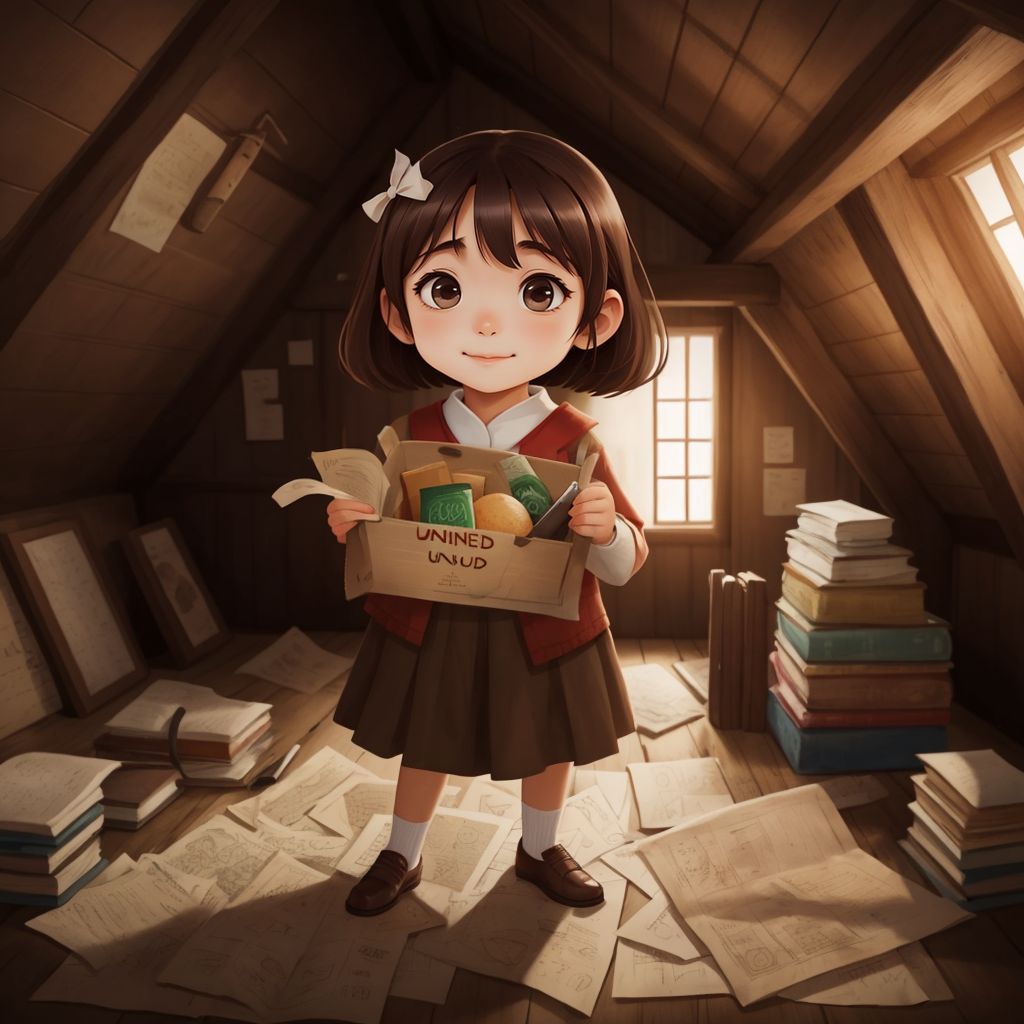
Once upon a time in a quaint little village, nestled at the edge of a vast and mysterious forest, lived a smart little girl named Lily and her courageous best friend, Jack. Lily had sparkling blue eyes that twinkled with curiosity and a mind as sharp as a tack. Jack, on the other hand, had a heart as brave as a lion’s, always ready for an adventure

group of prisoners gets shipped to a group of remote islands. they are given a timer of 5 days at 7:06 and a creepy title. the main character, john ,who is 36, is at first deppresed about surviving but finds his courage. he makes camp at a creek. a giant white scp with blood dripping from its mouth scares john, but he fights it off, breaking his left arm in the process. he then goes fishing with a diamond rod, but catches another scp the size of the titanic emerges from ocean and almost eats john. then the firework shoots and he gets scared. 10 scps get realeased, all unique. he fights bravley. but in the end his foot gets eaten. he gets shippped off to his wife and earns 45600000 dollars.

E

the mountain of diamonds

故事背景 在新界的深山之中,隱藏著一個充滿歷史的村落——龍躍頭。這裡的山脈層疊,翠綠的樹林彌漫著清新的空氣,時常能聽到鳥兒的啁啾聲。村莊的每一個角落都浸透著古老的傳說,透過那些古樸的宗祠、圍村和廟宇,彷彿能聽見祖先的低語。這裡的鄧族人,至今仍保留著傳統的節慶和風俗,與大自然和諧共處,守護著這片土地的文化與精神。 故事大綱 在一個陽光燦爛的春天,鄧小龍和小美決定一起探索村莊的秘密。他們聽說村子裡的老圍有一個隱藏已久的寶藏,據說是南宋末年,宋室皇姑留下的遺物。這引發了他們的好奇心,決定展開一場尋寶之旅。 在尋找寶藏的過程中,他們造訪了古老的松嶺鄧公祠,聆聽鄧阿婆講述的故事,了解到鄧族與皇室的淵源以及文化傳承的重要性。在天后宮,鄧志強帶著他們參加傳統的祭祖儀式,讓他們體會到祖先的精神與文化的力量。 隨著故事的發展,小龍和小美逐漸明白,真正的寶藏並不是金銀財寶,而是這片土地上流傳下來的文化與傳統。他們決定用自己的方式來守護這份遺產,通過藝術與故事把龍躍頭的美好傳遞給更多的人。 環境描寫 故事中的村莊充滿了生機與活力。春天,花朵盛開,樹木綠意盎然,空氣中彌漫著泥土和花香的芬芳。夏天,青蛙的叫聲此起彼伏,稻田裡金色的稻穗隨風搖曳,彷彿在與大自然共舞。秋天,果樹上結滿了豐滿的果實,村民們忙著收穫,臉上洋溢著幸福的微笑。冬天,白雪覆蓋了整個村莊,村民們圍坐在火爐旁,分享著溫暖的故事。 結尾 在故事的最後,鄧小龍和小美決定舉辦一個文化展,邀請村莊的每一位成員參與,展示他們的繪畫作品和故事,並讓更多的人了解龍躍頭的獨特文化。他們的努力不僅讓村莊的傳統得以延續,也讓這片土地的故事在新一代中生根發芽。 故事主題 這個故事不僅是一段尋寶的冒險,更是一場文化保育的旅程,呼籲人們珍視和傳承自己的文化與歷史。透過角色的成長,讀者將感受到探索與守護的意義,並對龍躍頭的豐富文化有更深的理解。

a female kid named divine throws everywhere